Best online casino payment methods for Australians in 2026
 Available in US
The deposit side of an Australian online casino looks ordinary. PayID lands in 60 seconds, Apple Pay settles on a fingerprint, cards swipe through. The withdrawal side is where the picture changes — and the change is what this page is built around. Every rail in 2026 comes with its own trade-off, every operator its own licence story, and the law tightening around them from 1 January 2027 is part of that story too.
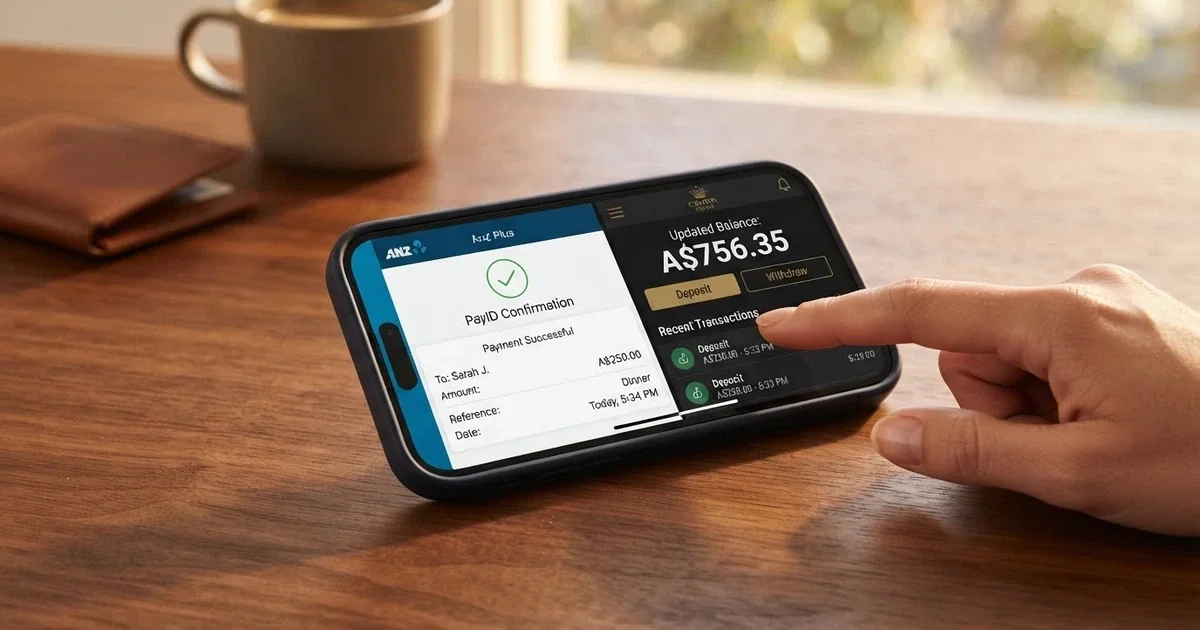
PayID has eaten the AU deposit page — over 42% of Australian casino players use it, and the rest of the rails arrange themselves around it. Crypto runs the withdrawals, with sub-5-hour benchmarks and USDT on TRC-20 the cheapest on-chain rail. The flat middle ground — cards, BPAY, bank transfer — is where the wait lives, and where the offshore reality shows up.
Data current as of 3 September 2026 and verified against the ACMA’s public register.
- Depositing is easy — cashing out is where casinos are really tested
- What Australians can still use to pay — and what’s quietly gone
- Crypto is the fastest way out — and the tell of an offshore site
- Mobile isn’t a separate method — it’s where most AU casino payments happen
- Six offshore casinos ranked by how they move your money
- Every listed casino is offshore — and the law is about to bite harder
- Deposit controls are the one guardrail you can set yourself
- How we chose and checked these payment methods and operators
- Which payment method to choose in 2026 — and what no method can fix
- Frequently asked questions
Depositing is easy — cashing out is where casinos are really tested
Everything the cashier has to handle
A casino cashier does two jobs, and they don’t run on the same timetable. Deposits are a money-in motion: the player picks a rail, approves a payment, the balance updates. Withdrawals are a money-out motion, and most of them aren’t payments at all in the legal sense — they’re the casino agreeing to release a balance, sometimes after a review window that has nothing to do with the rail itself. That gap is what every comparison on this page is built on.
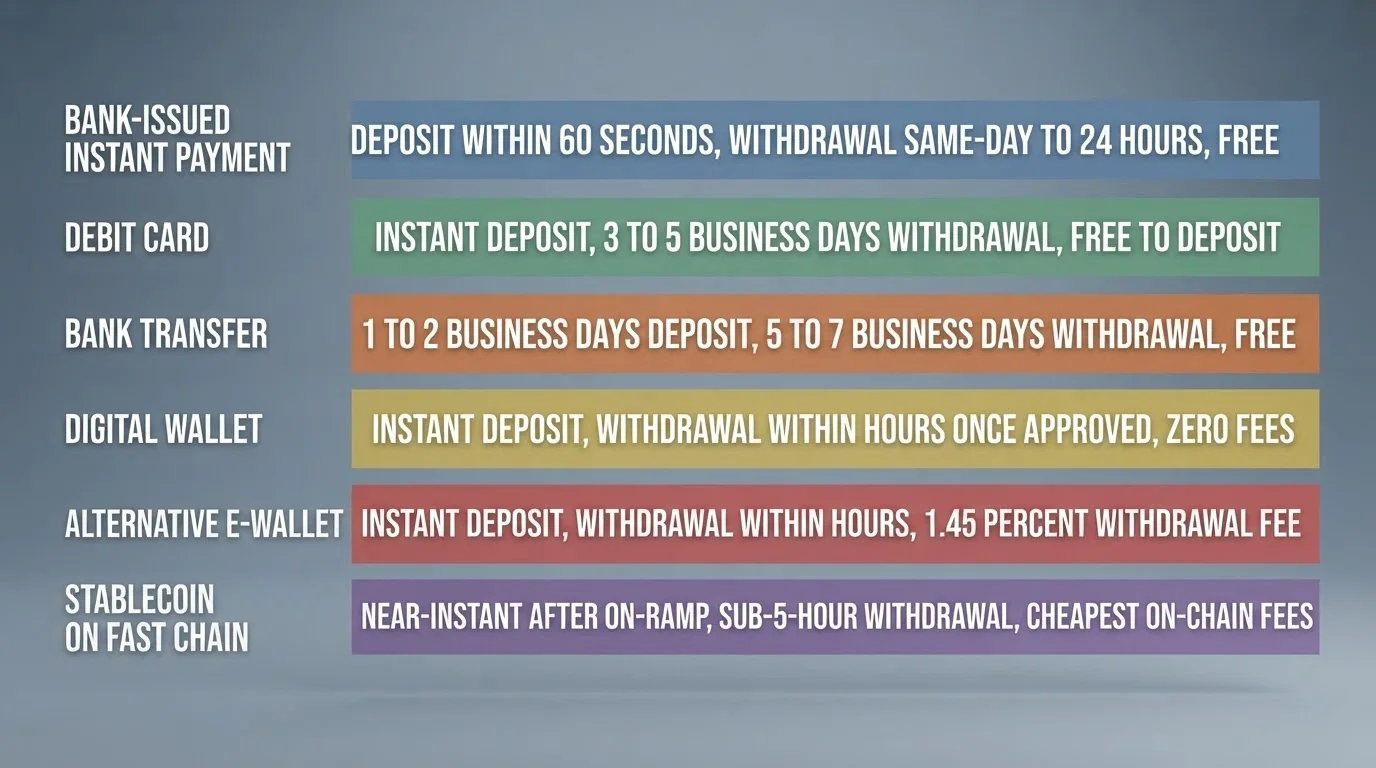
E-wallet deposits are instant and withdrawals are often processed within hours once approved. PayID deposits appear in the balance within 60 seconds through the banking app. Cards work both directions, but card withdrawals are the slowest at three to five business days, plus an extra round of KYC tied to the card. Bank transfers are slower still — five to seven business days at most operators, and the heaviest KYC chain of any method. BPAY takes one to two business days to deposit and three to five to withdraw. None of those numbers are rails alone — they’re the rails plus the casino’s review window, the cashier’s processing hours, and whatever the bank decides to do in between.
Some casinos impose a mandatory review window of 24 to 48 hours before any withdrawal is processed, regardless of method. That window applies whether the player is withdrawing by PayID, by e-wallet or by crypto, and it’s the part the marketing copy skips. The rail speed only kicks in once the review is done.
Why online banking replaces the cash desk
The AU online casino has no physical cash desk. The product is prohibited under the Interactive Gambling Act 2001 — online casino games, online pokies and in-play sports betting carry no licence anywhere in Australia. The IGA targets the provider, not the consumer; that part hasn’t changed. What has changed is that the rails themselves — debit cards, PayID, BPAY, bank transfer — are now the only legal way a licensed wagering operator can take Australian money, and an offshore casino accepts them on top of crypto on top of an array of e-wallets that no AU bank has ever cleared for an AU player.
The offshore result is a cashier that’s wider than the AU banking system but thinner in protection. A licensed Australian wagering operator offers deposit limits and activity statements under state or territory conditions. An offshore brand runs on its own house rules. The rails don’t change, but the rules around them do, and that’s the part a player should read before tapping “deposit”.
AUD, AU-friendly options and why some global methods never arrive
Australian-friendly doesn’t mean global. PayID only works for AU-issued details, Osko sits on the same NPP rail, BPAY is bill-payment rails that some operators still accept. The methods that don’t arrive are the ones that depend on US and EU banking — ACH, SEPA, Zelle, a long list of country-restricted e-wallets. They appear in offshore cashier lists and refuse the AU player at the next step.
AUD settlement matters at the cashier more than the marketing lets on. PayID and bank transfer clear in Australian dollars with no conversion fee. Cards convert at the card issuer’s rate. Crypto arrives in coins, converts at the exchange rate when sold back. Many local lenders impose default daily limits of A$1,000–A$5,000 on PayID outgoing transfers, raisable in-app or by phone; Citi Bank Australia allows up to A$10,000 per day. That bank-side cap is the real ceiling on a deposit at most AU-facing casinos, not the casino’s own minimum.
What Australians can still use to pay — and what’s quietly gone
Australian players in 2026 use PayID, Visa/Mastercard or crypto — Bitcoin, USDT, Ethereum or Litecoin. POLi was decommissioned by ANZ on 30 September 2023 and is no longer available at any casino. The method landscape has narrowed and widened at once: the AU-friendly rails are sharper, the offshore options are deeper, and the choice signals what kind of operator sits at the other end of the cashier.
The method directory at a glance
| Method | Deposit speed | Withdrawal speed | Fees and limits |
|---|---|---|---|
| PayID | Within 60 seconds | Same day to 24 hours; bank daily cap typically A$1,000–A$5,000 | Free at the cashier; bank cap varies (Citi up to A$10,000) |
| Visa / Mastercard debit | Instant | 3–5 business days plus card KYC | Free to deposit; bank-issued daily limit applies |
| Bank transfer | 1–2 business days | 5–7 business days | Free; bank-imposed limits, heaviest KYC chain |
| BPAY | 1–2 business days | 3–5 business days | Free; bill-payment rails |
| PayPal | Instant | Within hours once approved | Zero fees; strongest consumer fraud protection among e-wallets |
| Skrill | Instant | Within hours once approved | 1.45% on withdrawals |
| Neteller | Instant | Within hours once approved | 1.75% on withdrawals |
| Apple Pay / Google Pay | Instant via Face ID / Touch ID | Routes to underlying card; card’s withdrawal time applies | Zero fees at the tap |
| Neosurf | Instant | — | Deposit-only — no withdrawals possible |
| USDT (TRC-20) | After AUD-to-crypto on-ramp; then near-instant | Sub-5-hour average across tests | Cheapest crypto on-chain fees; most widely supported |
| Bitcoin / Ethereum / Litecoin | After AUD-to-crypto on-ramp; then near-instant | Sub-5-hour average across tests | Higher on-chain fees than USDT; BTC most established |
The headline split is deposit-speed versus everything else. Cards and bank transfers move slowest on the way out because they are the rails that the casino’s own KYC pipeline touches most often — every withdrawal triggers a fresh round of card or account verification, and that work is what stretches three to five business days into seven. PayID sits in the middle on the way out — bank-imposed daily caps often A$1,000 to A$5,000 keep it from carrying a big win in one go.
PayID, cards and the bank rails that still work
PayID is the deposit default. Limits per casino are typically a A$30 minimum deposit and a A$4,000 daily withdrawal; bank-side limits cap outgoing transfers at A$1,000 to A$5,000 per day unless raised. PayID rides the New Payments Platform through Osko, which is why deposits appear in the balance within 60 seconds — the rail is real-time, but the bank-side cap is what most players hit first.
Visa and Mastercard debit work on the way in. The credit-card ban began on 11 June 2024 and covers credit cards, credit-related products and credit-linked digital wallets; Mastercard debit cards still work, and so does any Visa debit. Card withdrawals are the slowest at three to five business days, plus an extra round of KYC tied to the card itself. Bank transfer withdrawals run five to seven business days and are the heaviest KYC chain of any method. BPAY deposits take one to two business days and withdrawals three to five — sturdy bill-payment rails, slow for gaming.
POLi used to sit alongside PayID in every AU-facing cashier. ANZ decommissioned it on 30 September 2023, and it is no longer available at any casino. Any review still listing POLi as a current deposit option has not been updated in three years.
E-wallets and phone wallets
PayPal is the cleanest e-wallet at the cashier. Deposits are instant with zero fees, and it carries the strongest consumer fraud protection available among e-wallets — a chargeback path that cards and bank transfers don’t offer on a casino withdrawal. PayPal does not appear on every offshore cashier list, but where it does, it tends to be the player’s first choice for dispute resolution.
Skrill and Neteller move the money faster than cards and bank transfers, with e-wallet deposits instant and withdrawals processed within hours once approved. The cost sits in the withdrawal fee — Skrill charges 1.45% and Neteller charges 1.75%. Neither is ruinous, but neither is free, and the fee is a flat percentage of the cashout, not a flat fee.
Apple Pay and Google Pay are the biometric bridge to the underlying card. Deposits are instant with zero fees via Face ID or Touch ID, and the player’s existing card handles the actual money movement. The withdrawal goes back to that card and inherits the card’s three-to-five-day window, which is the part most players miss when they tap to pay.
Why deposits feel instant and withdrawals don’t
Deposits are a payment — the player authorises it, the rail confirms it, the balance updates. Withdrawals are an approval — the casino decides to release the balance, sometimes after a mandatory 24 to 48 hour review regardless of the rail. Some casinos hold every withdrawal for that window, and the window applies whether the player is withdrawing by PayID, by e-wallet or by crypto. The rail speed only kicks in once the review is done.
The card and bank rails pay the cost of that review in business days. Wild Fortune’s PayID test cleared A$250 in 11 minutes; the same operator’s crypto withdrawal averaged 4 hours 53 minutes across five tests. The fastest real-world benchmark at an Australian-facing casino is hours, not minutes, and the gap between crypto and the rest is what shapes the cashout ranking further down this page.
The tech behind instant deposits
PayID deposits appear in the balance within 60 seconds because the rail is the New Payments Platform and the underlying service is Osko — real-time, 24/7, settled in seconds. The gateway and provider layer sits between the casino and the bank, but it does not change the rail. What it does is bring a per-casino daily ceiling, typically a A$30 minimum and a A$4,000 daily withdrawal, on top of whatever the bank itself imposes.
The bank-side cap is the real ceiling. Several Australian banks limit PayID outgoing transfers in the A$1,000–A$5,000 range by default, raisable in-app or by phone. Citi Bank Australia allows up to A$10,000 per day using PayID. The player who hits a casino’s A$30 minimum every day for a week and a half can run into the bank cap before they hit any casino cap, and the cap is raised by calling the bank, not by emailing the casino.
The method that’s genuinely safest
“Safe” at the cashier means two different things, and they don’t always live in the same place. PayPal offers the strongest consumer fraud protection available among e-wallets, with a chargeback path that no other rail on this list matches. Cards offer chargeback through the card issuer. Bank transfers and PayID offer nothing of the kind — once the money has gone, the bank has no reason to bring it back. Crypto is irreversible on-chain.
The legal framing matters as much as the rail. An Australian asked for a credit card or a crypto deposit is being served by someone outside the Australian rules, and the payment method is itself a tell. A licensed Australian wagering operator cannot legally accept credit cards, credit-related products or crypto; an offshore brand can, and does, and the rails a casino accepts say more about its regulatory status than any licence badge on the homepage.
Crypto is the fastest way out — and the tell of an offshore site
Crypto at an Australian online casino runs on a different timetable than anything on a card. A Bitcoin or USDT withdrawal can settle in under five hours; cards take three to five business days, bank transfers five to seven. The reason is structural — crypto is settled on-chain, not by the casino’s KYC pipeline. The price is anonymity: no chargeback, no dispute path, no Australian complaints body if the operator refuses to release a balance.

Crypto is also banned as payment for licensed online wagering since 11 June 2024 under the Interactive Gambling Amendment (Credit and Other Measures) Act 2023. Penalties reach A$247,500. A site asking for a crypto deposit from an Australian player is operating outside the Australian rules. The rail itself is the tell — and the offshore section further down this page carries the legal framing.
Buying BTC with AUD and depositing it
The first step is the on-ramp. CoinSpot, BTC Markets, Swyftx and CoinJar are the cited AUD on-ramps for buying Bitcoin. Each accepts PayID/Osko or bank transfer from an Australian bank account, KYC-verifies the buyer once, and credits the BTC to a wallet that can then send to a casino deposit address. The exchange fee sits between one and two per cent on top of the spread; the on-ramp time is minutes for PayID-funded transfers, longer for bank transfers.
Once the coins land in the player’s wallet, the deposit is a wallet-to-wallet transfer to a casino address. USDT on TRC-20 is the cheapest crypto in on-chain fees and the most widely supported for AU casino deposits and withdrawals. Neospin accepts USDT deposits from 5 USDT, around A$7 at recent rates — the lowest entry point in this set. Wild Fortune accepts 0.0001 BTC and 5 USDT among its crypto minimums. The on-ramp fee is fixed; the on-chain fee is the variable.
Why crypto wins withdrawals
The fastest benchmark the page can quote is a Wild Fortune PayID test clearing A$250 in 11 minutes and a crypto withdrawal averaging 4 hours 53 minutes across five tests at the same brand. The PayID figure is the outlier — PayID’s usual cashout is same-day to 24 hours once the casino’s review is done. Crypto’s benchmark is the average, not the best case.
Bank transfer withdrawals run five to seven business days by contrast. The reason crypto wins is that the casino’s KYC pipeline never gets to touch the rail. The operator has already verified the player on deposit; the withdrawal is a signed transaction to a wallet address already on file. The on-chain confirmation is what takes the time, and that is minutes to hours, not business days.
The coins casinos actually take
RocketPlay accepts 34 methods including Bitcoin, Ethereum, USDT, Litecoin, Dogecoin and Bitcoin Cash — the widest crypto spread of any operator on the page. Most of the rest take BTC, ETH, USDT and LTC as a minimum. The added coins — DOGE, BCH, ADA, BNB, TRX, XRP — show up at the operators chasing breadth, not the ones chasing clarity.
Mobile is where the action happens. 68% of tested Bitcoin casino transactions in Australia occurred via mobile devices, with the wallet-to-wallet deposit and withdrawal both completing inside the casino app. Apple Pay and Google Pay are the fiat-side equivalent for the players who don’t want to touch a wallet at all — biometric, instant, zero fees.
Mobile isn’t a separate method — it’s where most AU casino payments happen
The casino cashier works the same way on a phone as on a desktop — same rails, same limits, same operator. The mobile-first shift isn’t a payment-method shift, it’s a payment-channel shift. 68% of tested Bitcoin casino transactions in Australia happened on a mobile device, and the share for Apple Pay and Google Pay deposits is effectively 100% by definition. A phone is not an alternative rail — it is the screen most Australian players see the rails on.

Apps vs mobile browser
The browser does the same job as the app for almost every AU-facing casino, and the cashier behaves identically either way. The browser version skips the App Store and Google Play restrictions on real-money gaming apps, which is why so few AU-facing casinos publish a downloadable app at all. The PayID, card and crypto flows run inside an HTML5 wrapper; Apple Pay and Google Pay sit on top.
The mobile-first operators optimise for that browser. Tap-to-pay deposits settle inside the casino frame; Face ID and Touch ID confirm the payment without leaving the session. The wallet side on crypto is also a mobile-first experience — most exchanges and wallet apps are phone-first, and the 68% mobile share of Bitcoin transactions is a direct consequence.
Phone-billing and SMS are mostly not a casino rail
Carrier-billed and SMS deposits are not a mainstream AU casino rail. None of the operators on the ranked list below accepts charge-to-phone deposits, and the few that once did have moved off it. SMS at the AU-facing cashier appears as account notifications and two-factor codes, never as a payment instruction.
Phone billing is a different product in Australia — premium-rate SMS, content charges, the stuff of small one-off purchases. Casino deposits are too large for it, too recurring for it, and the carriers’ own compliance posture moves away from gambling. The mobile rail a player actually uses is Apple Pay, Google Pay, PayID in a banking app, or a crypto wallet on the same device.
Paying from the phone mid-session
The biometric tap is the headline. Apple Pay and Google Pay deposits are instant with zero fees using biometric authentication — Face ID or Touch ID confirms the payment, the casino balance updates inside the session, the player never leaves the game. PayID on mobile runs through the banking app: the player opens the banking app, approves the PayID, the casino balance updates within 60 seconds. The session can be paused for thirty seconds without anyone noticing.
The 60-second window is real. PayID deposits appear in the balance within 60 seconds through the banking app, on top of which the casino’s own deposit confirmation is instant. A top-up during play takes longer to walk to the cashier than to clear.
Six offshore casinos ranked by how they move your money
The ranking below orders the six operators by payment behaviour — method breadth, deposit minimums, withdrawal caps and cashout speed. It is not a legal ranking: every operator on the list is offshore, every Australian online casino licence does not exist under the Interactive Gambling Act 2001, and the brands below are operating outside the Australian rules whether or not they advertise themselves as doing so. A licence from Curaçao, Kahnawake or Tobique changes which regulator oversees the brand; it does not change the offshore status for an Australian player.
| Operator | Licence status | Welcome bonus | Wagering requirement | Withdrawal limits |
|---|---|---|---|---|
| Rocket Play | Offshore (no AU casino licence possible) | Up to A$2,000 + 100 free spins | 40x | — |
| SkyCrown | Offshore (Curaçao licence cited; no AU casino licence possible) | 450% up to A$8,000 + 400 free spins | 40x | A$7,500 weekly / A$45,000 monthly |
| Neospin | Offshore (Curaçao licence cited; no AU casino licence possible) | Up to A$11,000 + 300 free spins | 40x | A$45,000 monthly |
| Casinonic | Offshore (no AU casino licence possible) | Up to A$5,000 across 10 deposits | 50x | A$7,500 weekly / A$15,000 monthly |
| Bizzo Casino | Offshore — dual licence: Curaçao (8048/JAZ2017-067) and Kahnawake (no AU casino licence possible) | Up to A$7,750 + 175 free spins | 40x | — |
| Wild Fortune | Offshore — Tobique #0000064 per Payout Verdict / Curaçao per Slotozilla (no AU casino licence possible) | 225% / CA$7,500 + 250 free spins | 0x | Min A$100, max A$5,000 per transaction |
The four withdrawal-limit columns that hold a figure set the ceiling a player hits before any bonus math does. A$45,000 monthly is the highest of the set (SkyCrown and Neospin); A$15,000 is the lowest (Casinonic). The wagering column is where the welcome package meets its real cost — every cent of the matched bonus carries the multiplier, and 40x on A$8,000 means A$320,000 in turnover before the bonus is cleared. The two dashes are operators whose withdrawal caps are not published on the banking page; a player who runs a big win at either brand should check the cashier before the deposit.
The way the ranking is decided
The criteria are method breadth, deposit minimums, withdrawal limits and cashout speed. RocketPlay’s 34 methods set the breadth benchmark; PayID’s A$30 minimum and A$4,000 daily set the limits benchmark; Wild Fortune’s 11-minute PayID and 4 hour 53 minute crypto set the speed benchmark. Each operator below is described against those benchmarks, with its licence, welcome bonus and withdrawal figures quoted from the operator’s own banking page and recent testing.
The criteria were chosen because they are what a player feels at the cashier. Licence status appears in every row because the question of which regulator oversees a brand is part of the picture even when the answer is “no Australian regulator, by design”. The order is method behaviour, not legal standing; the legal standing is the same for all six and is unpacked in detail further down this page.
Rocket Play
RocketPlay accepts 34 payment methods including Neteller, Skrill, PaysafeCard, Payz, Mastercard, VISA, Bitcoin, Neosurf and MiFinity — the broadest method list of the featured set. The welcome package is up to A$2,000 plus 100 free spins, with the first deposit a 100% match plus the free spins and the second a 200% boost; minimum deposit is A$20, wagering is 40x.
Withdrawal limits are not published on RocketPlay’s banking page, which is the one gap the row carries in the comparison table. A$20 minimum deposit is the lowest in the set for the welcome package; the breadth of methods is unmatched. RocketPlay is the wide-shelf option — every mainstream rail an Australian player will see, fewer answers about the cashout caps. A brand for the player who values method range over bonus depth.
SkyCrown
SkyCrown’s welcome is the deepest bonus of the set at 450% up to A$8,000 plus 400 free spins across four deposits — 120% up to A$1,200 plus 125 free spins on the first, 100% up to A$1,300 plus 75 on the second, 80% up to A$1,500 plus 50 on the third, 150% up to A$4,000 plus 150 on the fourth. Minimum deposits step up: A$30 for the first and second bonus deposits, A$40 for the third, A$50 for the fourth. Wagering is 40x; the bonus is not available to crypto players.
Withdrawal limits are A$7,500 weekly and A$45,000 monthly, with a A$20 minimum withdrawal. Cashout times are e-wallets in 24 hours, cards one to three days, bank transfers three to five days. The Curaçao licence is the operator’s regulator, not an Australian regulator.
The 450% headline is the highest in this set, and the A$45,000 monthly cap is the highest too. The bonus isn’t available to crypto players, and 40x on every dollar of the matched amount is what the player is really signing up for — A$320,000 in turnover against the headline alone. SkyCrown is the operator for a player who can clear the bonus with a bankroll big enough to absorb the variance, and who pays in fiat.
Neospin
Neospin’s welcome is the biggest headline number in the set at up to A$11,000 plus 300 free spins across four deposits — 100% up to A$1,500 plus 100 free spins on the first, 100% up to A$2,000 plus 25 on the second, 75% up to A$2,500 plus 75 on the third, 25% up to A$5,000 plus 100 on the fourth. Wagering is 40x. Fiat minimum deposit is A$30, and USDT deposits start from 5 USDT — around A$7 at recent rates, the lowest crypto entry on the page.
Withdrawal limits are A$45,000 per month, with a A$30 fiat minimum and a A$45 crypto minimum. Cashout times run MiFinity instant to 72 hours, crypto instant to 48 hours, bank transfer three to seven business days, PayAnyBank one to three business days. The Curaçao licence is cited; no AU casino licence is possible.
Neospin’s A$11,000 welcome is the biggest headline number in the set, paired with the cheapest crypto minimum (5 USDT, around A$7) and a generous A$45,000 monthly cap. The 40x wagering eats most of the headline; the player who runs the bonus is the one who wins. Suits crypto-funded players who want the lowest on-ramp and the highest monthly ceiling.
Casinonic
Casinonic’s welcome package is worth up to A$5,000 across ten deposits — the first and second are 100% up to A$500 each, the third through tenth are 50% up to A$500 each, with 50x wagering, a 7-day validity and a A$7 maximum bet. Minimum deposit is A$30, the cap is high but the requirement is heavy. Bonus carries a tighter structure than the four-deposit packages elsewhere in the set.
Withdrawal limits are A$7,500 weekly and A$15,000 monthly across all payment methods — the lowest monthly cap in the set. Cashout time is one to three days, with e-wallets faster. The operator’s specific licence is not confirmed; no AU casino licence is possible.
Ten deposits at 50x is the toughest welcome in this set, and the A$15,000 monthly cap is the lowest. Casinonic is built for the casual punter running small weekly deposits, not for clearing a multi-thousand-dollar bonus. The breadth is fiat-and-crypto; the ceiling is the constraint.
Bizzo Casino
Bizzo Casino holds a dual licence — Curaçao (8048/JAZ2017-067) and the Kahnawake Gaming Commission — and launched in 2021 under TechSolutions Group N.V. The 4-deposit welcome package is up to A$7,750 plus 175 free spins: the first deposit tiered between 50% and 125% depending on the amount, up to A$2,500 plus 125 free spins; the second 50% up to A$1,000 plus 50 free spins. Wagering is 40x; the maximum bet is A$6.50.
The minimum deposit is A$10 to A$25 depending on the method, and PayID withdrawals at Bizzo processed in under 24 hours in two of three recent tests — putting it in the same speed bracket as the e-wallets. Method breadth runs Visa, Mastercard, PayID, Skrill, Neteller, ecoPayz, Luxon, Neosurf, Sticpay, Flykk, Xanpay and 22+ cryptocurrencies.
Bizzo is the dual-licence brand that pairs PayID with the deepest reload promo on the list. The PayID cashout is the standout — under 24 hours across two of three tests puts Bizzo in the same bracket as the e-wallets, which is unusual for a fiat-to-AUD rail at an offshore brand.
Wild Fortune
Wild Fortune accepts Visa, Mastercard, Maestro, Neosurf, Apple Pay Mastercard, MiFinity, ecoPayz and bank transfer, plus a wide crypto list. The minimum deposit is A$15 for Visa, Mastercard, Maestro and Neosurf, A$20 for Apple Pay, with crypto minima varying by coin (0.0001 BTC, 5 USDT among them). The 225% / CA$7,500 plus 250 free spins welcome carries 0x wagering — rare in the offshore market — but is denominated in Canadian dollars.
The withdrawal cap is A$100 minimum, A$5,000 maximum per transaction. Crypto averaged 4 hours 53 minutes across five tests; the PayID test cleared A$250 in 11 minutes; bank transfer up to five days; MiFinity and ecoPayz up to 24 hours. Wild Fortune’s licence is cited as Tobique #0000064 by Payout Verdict and as Curaçao by Slotozilla — two regulator names for the same brand.
Wild Fortune suits the player testing a method rather than chasing a headline: the 0x wagering welcome is rare in this market, the PayID test cleared A$250 in 11 minutes, and the per-transaction cap of A$5,000 keeps the cashouts honest. A starting point, not a destination. Mind the CAD denomination on the bonus.
Every listed casino is offshore — and the law is about to bite harder
The Interactive Gambling Act 2001 prohibits online casino games, online pokies and in-play sports betting. There is no licence for any of these products anywhere in Australia — by design, not by oversight. The six operators ranked above are offshore brands offering a prohibited product to Australian players. The legal status of a brand in Curaçao, Kahnawake or Tobique does not change that fact for an Australian player.
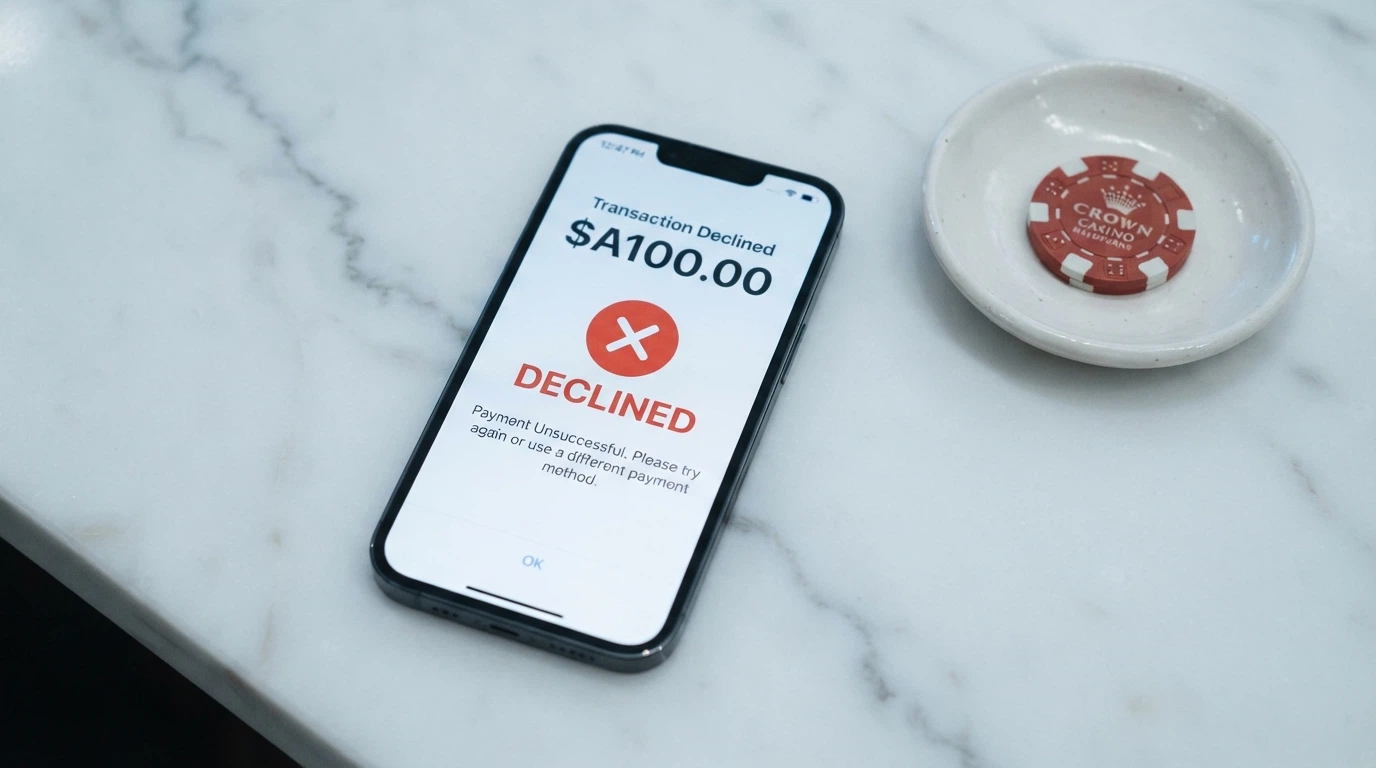
The reform passed 19 August 2026 — the Interactive Gambling Amendment (Gambling Reform) Bill 2026 — and commences 1 January 2027. Banks and payment providers gain express authority to block transactions to illegal gambling operators from that date. The rail that lets an Australian player deposit today is the rail a bank may refuse to clear tomorrow.
What the IGA bans and the ACMA enforces
The IGA prohibits online casino games, online pokies and in-play sports betting — the products that make up almost every offshore casino’s offering. The Act targets the provider, not the consumer; an Australian player is not prosecuted for playing. The enforcement sits with the Australian Communications and Media Authority, which has had 1,564 illegal gambling and affiliate sites blocked by Australian ISPs since November 2019, with more than 225 illegal services withdrawn from the Australian market since 2017.
The ACMA completed 23 investigations involving 45 gambling sites in Q4 2025, finding 69 breaches across the quarter — 38 for providing a prohibited interactive gambling service, 26 for providing an unlicensed regulated service, and 5 for advertising. Tabcorp received 8 infringement notices on 16 January 2026 totalling A$158,400 for providing a prohibited in-play betting service. The infrastructure of enforcement is real, even when the consumer-facing consequence is not.
Licensed vs offshore: the method itself is the giveaway
A licensed Australian wagering operator can take debit cards, PayID, BPAY and bank transfer. It cannot take credit cards, credit-related products or crypto — those are banned as payment for licensed online wagering since 11 June 2024, with penalties for non-compliance reaching A$247,500. The ban covers credit cards linked to digital wallets; Mastercard debit and Visa debit still work.
An Australian asked for a credit card or a crypto deposit is being served by someone outside the Australian rules. The payment method is itself a tell. The 450% up to A$8,000 welcome bonus at SkyCrown, the A$11,000 at Neospin, the 22+ cryptocurrencies at Bizzo — every offshore feature on this page is a feature an Australian-licensed operator cannot legally offer. The method signals the operator; the operator’s licence signals what protections the player loses.
Banks are about to gain the power to block casino payments
From 1 January 2027, banks and payment providers gain express authority to block transactions to illegal gambling operators. The reform passed Parliament on 19 August 2026 and commences on that date. The mechanism is the bank’s discretion, not a per-transaction flag — a bank may decline a PayID to a known operator’s BSB, refuse a card payment to a flagged merchant, or block a BPAY biller code. The rails don’t change, but the bank’s permission to use them does.
The same reform tightens BetStop’s operation, restricts direct marketing of gambling inducements, caps broadcast advertising at three ads per hour between 6:00 am and 8:30 pm, bans wagering advertising from 15 minutes before a live sporting event until 5 minutes after, bars broadcasting of sporting odds, and prohibits athletes and influencers from promoting wagering products. Direct marketing of inducements is prohibited for 14 days after sign-up, three months after BetStop deregistration, and indefinitely for at-risk customers. The full reform package runs in three phases over three years. The 1 January 2027 date is the start of phase one.
The offshore gap is the part no reform can close. BetStop binds licensed Australian wagering only; an offshore casino keeps taking a self-excluded person’s money. Gambling winnings are not assessable income under section 6-5 of the ITAA 1997, and losses are not deductible under section 8-1, unless the person is carrying on a business of betting or gambling. The player has no AU complaints body to take a refused withdrawal to, and no AU regulator to escalate a blocked payout. The deposit method moves the money; the offshore status determines who stands behind it.
Deposit controls are the one guardrail you can set yourself
Licensed Australian wagering operators offer customer-set deposit limits and activity statements under state or territory conditions. There is no federal deposit, loss or stake ceiling for online gambling — because the product those ceilings would govern is banned outright. The one control an offshore casino might offer is the one it offers voluntarily, and the guardrail the law leaves entirely in a player’s hands is the one set on the player’s own banking app.
About 2.1% of Australian adults — roughly 430,000 people — experience problem gambling. High-risk gambling was 1.8% in 2022. The numbers are small in share and large in absolute count, and they describe the population the guardrails are designed for.
Setting deposit and stake controls at the payment level
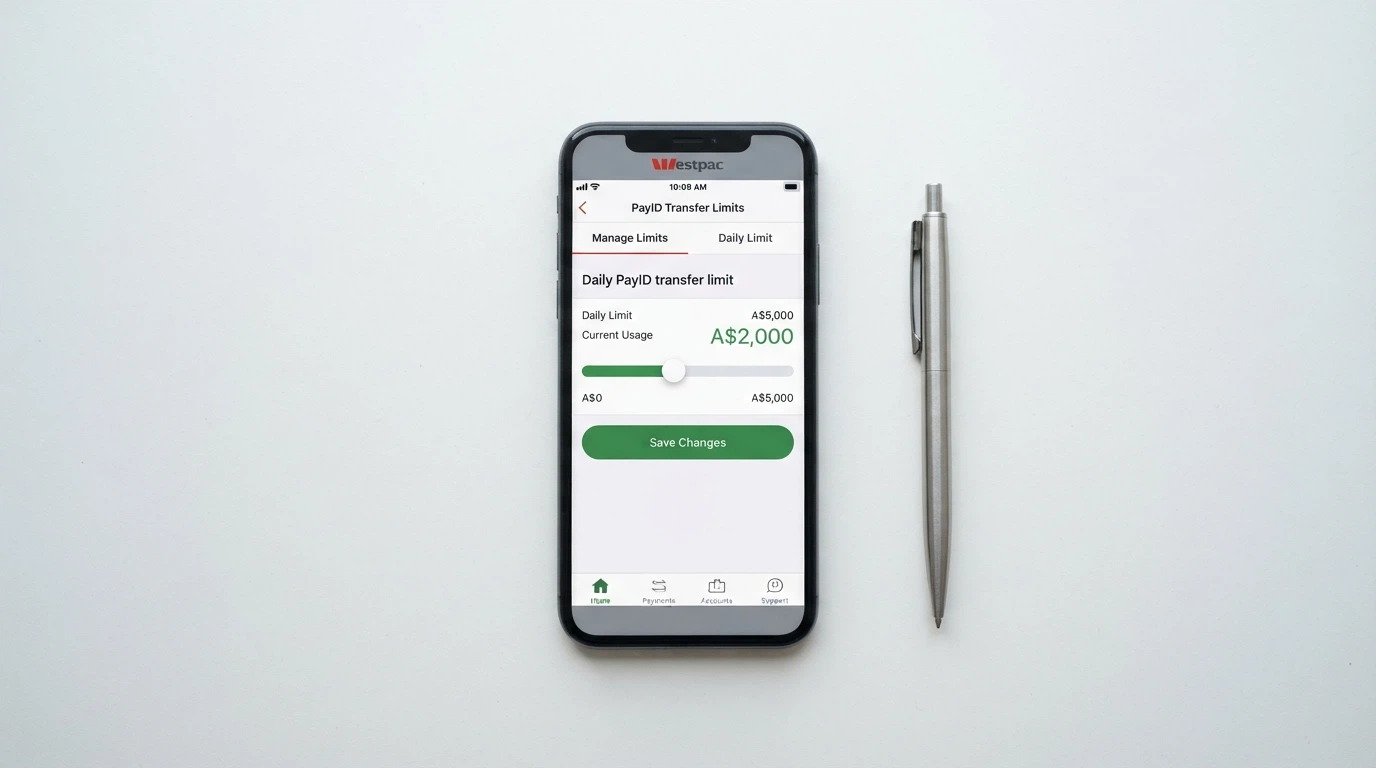
The bank-side PayID cap is the most concrete limit available to an Australian player. Some Australian banks cap PayID outgoing transfers at A$1,000 to A$5,000 per day by default, raisable in-app or by phone. Citi Bank Australia allows up to A$10,000 per day using PayID. Setting a daily PayID cap below the casino’s deposit minimum removes the rail entirely; setting it above the casino’s deposit minimum caps it.
A licensed wagering operator’s deposit-limit setting runs at the account level — daily, weekly or monthly, with a cool-down before any increase. Activity statements summarise deposits, withdrawals and net position. Offshore operators may offer equivalents; the consistency and the recourse are the player’s call.
The signs a session is going wrong
The clearest signal is the deposit frequency. A player topping up to chase a loss has crossed the line from session play to recovery play, and the activity statement is the only honest summary. Licensed operators provide it on request; an offshore brand may not.
The second signal is the bet-size drift — raising stakes to recover, or to feel something the smaller bet doesn’t. Both move the same direction. The 2.1% problem-gambling prevalence at 2.1% of Australian adults and high-risk gambling at 1.8% in 2022 describe the population the infrastructure serves — about 430,000 people in absolute terms, and the people behind a share of them are reading this page.
Help and exclusion pathways, and the offshore gap
The National Gambling Helpline is 1800 858 858 — free, confidential, 24/7 — with online chat through Gambling Help Online. The Gambler’s Help Youthline is 1800 262 376. For financial counselling after gambling harm, the National Debt Helpline on 1800 007 007 runs weekdays 9:30 am to 4:30 pm. Lifeline Australia takes crisis calls on 13 11 14, twenty-four hours a day.
BetStop — the National Self-Exclusion Register — has had 67,480 registrations since August 2023, with 41,290 exclusions still active at 31 July 2026; 78% of registrants were under 40 and 38% chose lifetime exclusion. Registration covers every Australian-licensed wagering operator at once for a minimum of three months up to a lifetime. BetStop binds licensed wagering only; an offshore casino is not connected to the register and will keep taking a self-excluded person’s money.
How we chose and checked these payment methods and operators
The methods on the directory table are the ones Australians can still use to deposit or withdraw at an AU-facing online casino in 2026 — PayID, cards, BPAY, bank transfer, the major e-wallets, Apple Pay and Google Pay, Neosurf, USDT and the major crypto coins. The decommissioned methods are flagged: POLi was shut down by ANZ on 30 September 2023 and is no longer available. Each method was checked against recent operator cashier pages and against the ACMA’s public enforcement record for prohibited services.
The six ranked operators were chosen for method breadth, deposit minimums, withdrawal limits and cashout speed. They were checked against the IGA’s no-online-casino-licence reality and against the ACMA’s enforcement record — none is licensed in Australia, and none can be. The order is by payment behaviour, not legal standing. The welcome bonus figures are quoted from each operator’s published terms; the wagering figures are the requirement that applies to the matched bonus amount; the withdrawal limits are the caps that apply to a settled account.
What this page is not is a comparison of safety, fairness or game library — those are out of scope for a payment-methods guide, and the offshore status of every operator named means none of them carries an Australian consumer protection. The page is built for the player deciding which rail to use, with the offshore reality stated plainly.
Which payment method to choose in 2026 — and what no method can fix
PayID is the default for an obvious reason: over 42% of Australian casino players use it, deposits land in 60 seconds, and every operator on the AU-facing list accepts it. For a player with a small bankroll playing in AUD, PayID is the rail that asks the least — no conversion, no on-ramp, no crypto wallet to manage. The bank-side cap (often A$1,000 to A$5,000 per day) is the real ceiling, not the casino’s own minimum.
Crypto is the rail for the player prioritising cashout speed. Wild Fortune’s PayID test cleared A$250 in 11 minutes, and the same operator’s crypto withdrawal averaged 4 hours 53 minutes across five tests. The fastest real-world cashout at an AU-facing casino is hours, not minutes, and the gap between crypto and the rest of the rails shapes the rest of the page. USDT on TRC-20 is the cheapest on-chain route and the most widely supported. The price is anonymity: no chargeback, no Australian complaints body, no recourse if the operator refuses to release a balance. The payment method is itself a tell — any site asking for a credit card or crypto from an Australian player is operating outside the Australian rules.
E-wallets sit in the middle: Skrill and Neteller move the money faster than cards and bank transfers, with withdrawal fees of 1.45% and 1.75% respectively. PayPal carries the strongest consumer fraud protection among e-wallets, with a chargeback path no other rail on this page matches. Apple Pay and Google Pay are the biometric bridge — instant, zero fees, the underlying card’s withdrawal time on the way out.
No method fixes the offshore reality. BetStop does not reach an offshore casino; an AU-facing brand is not connected to the register and will keep taking a self-excluded person’s money. The bank blocking authority coming 1 January 2027 may see a PayID declined to a flagged operator, but a deposit cleared today is a deposit the bank could decline tomorrow. Set a daily limit on the banking app before the first deposit. Pick the rail that matches the bankroll. Read the wagering requirement on every bonus before tapping “claim”.
Frequently asked questions
Is PayID the best deposit method for Australian online casino players?
PayID is the default for a reason — over 42% of Australian casino players use it, deposits land within 60 seconds and most AU-friendly casinos set minimums at A$10 to A$20. It is the most popular fiat method, not because it is faster than crypto, but because every operator on the AU-facing list accepts it.
How fast are cryptocurrency withdrawals at Australian-accessible online casinos?
Crypto is the fastest cashout rail. Wild Fortune’s average across five tests was 4 hours 53 minutes, with a PayID test clearing A$250 in 11 minutes as a benchmark. Crypto withdrawals typically run sub-5 hours once approved, against 3–5 business days for cards and 5–7 days for bank transfers.
Are credit cards still accepted at online casinos in Australia?
No credit card has been accepted at a licensed Australian wagering operator since 11 June 2024. Mastercard debit and Visa debit still work; credit products and credit-linked digital wallets do not. Any site asking for a credit card from an Australian player is operating outside the Australian rules.
What happened to POLi as a casino payment method in Australia?
POLi was decommissioned by ANZ on 30 September 2023 and is no longer available at any Australian-facing casino. Any review still listing POLi as a current deposit option has not been updated since that date. Visa, Mastercard, PayID, e-wallets and crypto have replaced it.
What is the minimum deposit amount at Australian online casinos?
Most Australian-friendly casinos set a minimum deposit of A$10 to A$20 for cards and e-wallets. PayID minimums sit around A$30 at most operators; some run lower. Crypto minimums vary by coin — for example, Neospin accepts USDT from 5 USDT (around A$7). Wild Fortune starts at A$15 for Visa, Mastercard, Maestro and Neosurf.
What is BetStop and does it apply to offshore casino sites?
BetStop is Australia’s National Self-Exclusion Register, run by the ACMA since August 2023. Registration covers every Australian-licensed wagering operator at once for a minimum of three months or up to a lifetime. It does not bind offshore casinos — they are not connected to the register and will keep taking a self-excluded player’s money.
Created by the ”Casino Payment Methods AU” editorial team.